
In today’s competitive digital environment, building a recognizable brand requires more than having a professional website or maintaining active social media accounts. Businesses need a clear identity, consistent messaging, and a well-defined digital branding strategy that communicates their value to the right audience
For companies operating in the U.S. lending and financial services industries, branding plays an especially important role. Potential customers often compare multiple providers before deciding which company they feel comfortable engaging with. A strong digital branding strategy, supported by clear communication and a consistent customer experience, can help businesses establish credibility, strengthen brand recognition, and stand out in a crowded market.
A well-planned digital branding strategy brings these elements together. It helps businesses communicate what makes them different, strengthen brand awareness, and build meaningful relationships with their target audience across digital channels.
In this guide, we’ll explore practical ways businesses can develop a stronger brand, improve their online presence, and create a consistent identity that supports long-term growth.
What Is a Digital Branding Strategy?
A digital branding strategy is a structured approach to building and managing a company’s identity across online channels. It defines how a business presents itself, communicates with its audience, and creates a recognizable experience through its website, search presence, social media platforms, and digital marketing campaigns.
Unlike traditional branding, which often focuses on offline materials such as print advertising and physical experiences, digital branding considers every online interaction a potential customer has with a business.
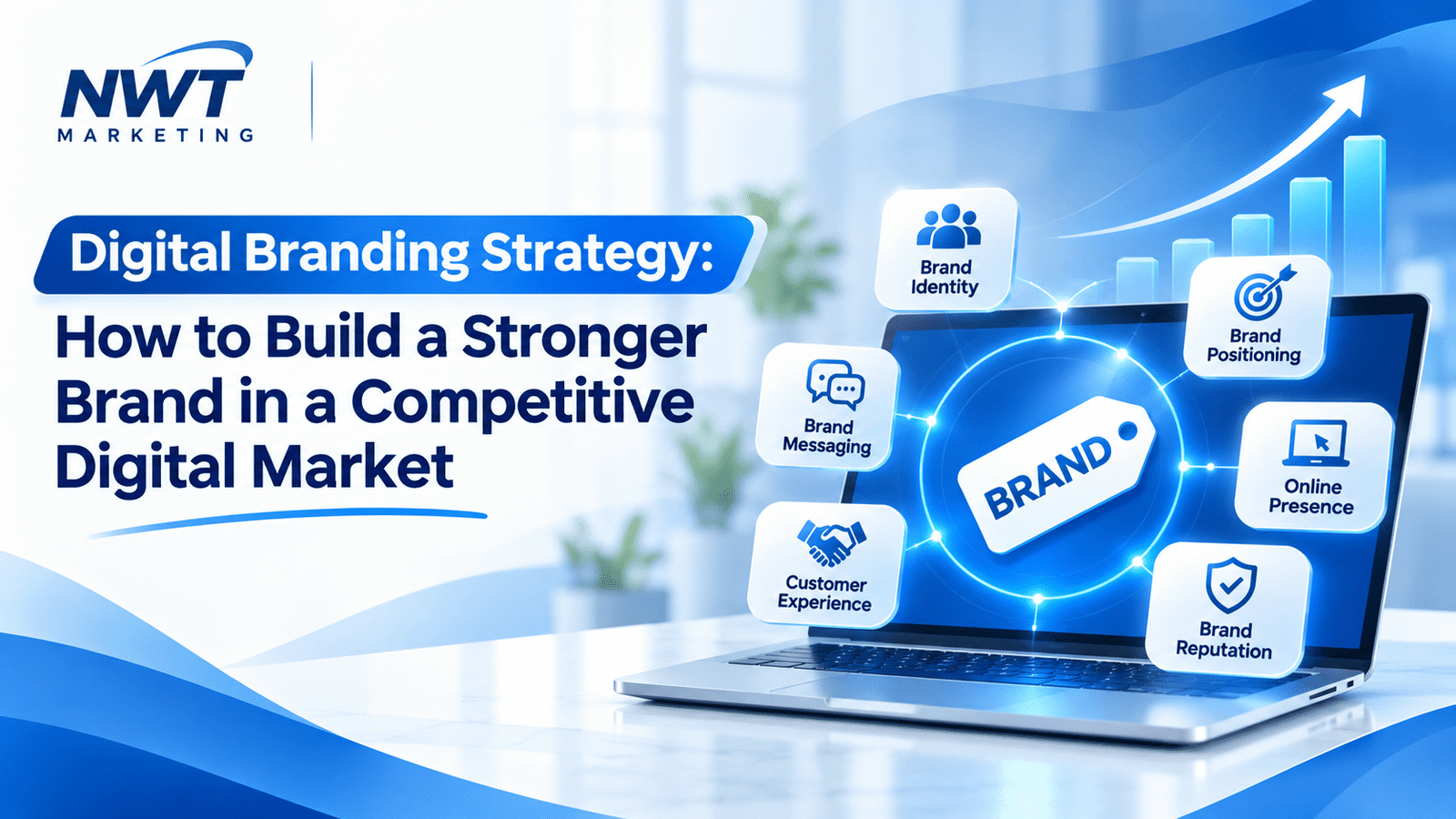
A comprehensive strategy typically includes:
- Brand identity: The visual and verbal elements that make a business recognizable.
- Brand positioning: The way a company communicates its value and differentiates itself from competitors.
- Brand messaging: The language, tone, and key messages used across marketing channels.
- Online brand presence: How the business appears across websites, search engines, social media, and other digital platforms.
- Customer experience: The consistency and quality of interactions throughout the customer journey.
- Brand reputation: How audiences perceive and evaluate the business based on its communication, services, and public presence.
For lending companies, these elements should communicate professionalism, transparency, reliability, and a clear understanding of customer needs.
1. Establish a Clear Brand Identity and Positioning
A strong brand starts with a clear understanding of what the business represents. Before investing in advertising, content creation, or social media campaigns, companies should develop a clear digital branding strategy that establishes an identity, communicates their purpose, and differentiates them from competitors.
A brand identity should answer three important questions:
- What does the company offer?
- Who does the company serve?
- Why should customers recognize and consider this business?
Without clear answers, marketing messages can become inconsistent, making it harder for audiences to understand what the business represents. Developing a recognizable brand also requires a clear understanding of how branding connects with broader business objectives. Lending companies can strengthen this approach by implementing effective digital marketing strategies for lending businesses that align brand positioning, audience engagement, and customer acquisition efforts.
Define Your Unique Value Proposition
A unique value proposition (UVP) explains what makes a company different and why its target audience should consider engaging with it.
For businesses in the lending industry, differentiation might come from:
- A specialized approach to a particular customer segment.
- A straightforward application experience.
- Responsive customer support.
- Clear communication throughout the customer journey.
- Digital tools that simplify customer interactions.
The value proposition should reflect genuine business capabilities rather than broad promises that competitors can easily repeat.
For example, instead of using a generic statement such as “We provide excellent customer service,” a company could communicate how its support team helps applicants understand each stage of the application process.
Develop Consistent Brand Messaging
Brand messaging defines how a company communicates its value across different platforms.
The website, advertisements, email campaigns, social media profiles, and customer communications should reinforce the same core message.
Consistency helps audiences recognize the brand and understand what they can expect when interacting with the business.
2. Build a Consistent Online Brand Presence
Your website is often one of the first places potential customers visit when researching a business. It should communicate the company’s identity clearly while making it easy for visitors to understand its services and next steps.
However, a strong online brand presence extends beyond the website. It includes every digital platform where the business interacts with its audience.
Optimize Your Website Experience
A professional website should combine strong branding with usability.
Consider the following elements:
- Visual consistency: Use consistent colors, typography, logos, and design elements.
- Clear navigation: Make important information and services easy to find.
- Mobile responsiveness: Ensure the website works effectively across smartphones, tablets, and desktops.
- Clear messaging: Explain what the company does without unnecessary industry jargon.
- Trust elements: Present accurate company information, contact details, and relevant service information.
- Conversion paths: Make it easy for visitors to take the next appropriate action.
For lending companies, the website should also communicate important information clearly and avoid confusing or misleading claims.
Maintain Consistency Across Digital Channels
A business may have an excellent website but still create a fragmented brand experience if its social media profiles, advertisements, and other online communications look unrelated.
To prevent this, establish brand guidelines covering:
- Logo usage and visual identity.
- Brand colors and typography.
- Writing style and tone of voice.
- Key messaging and value propositions.
- Image and video styles.
- Communication standards.
These guidelines help marketing teams maintain a recognizable identity even when multiple people manage different channels.
3. Strengthen Brand Awareness Through SEO and Content Marketing
Brand awareness is about making your business familiar to the right audience. A well-planned digital branding strategy, supported by search engine optimization (SEO) and content marketing, can help companies build this familiarity by providing useful information when people search for relevant topics.
Rather than relying entirely on paid advertising, businesses can develop a sustainable online presence by publishing valuable content and improving their visibility in relevant search results.
Use SEO to Improve Brand Visibility
SEO helps businesses appear in search results when their target audience looks for relevant information, services, or solutions.
A strong SEO strategy should include:
- Keyword research based on audience needs and search intent.
- Optimized service pages targeting relevant business queries.
- Informative blog articles addressing common questions.
- Internal linking between related pages.
- Technical SEO improvements that support crawling and indexing.
- Relevant metadata and descriptive page headings.
For consumer lending companies, content should address topics that genuinely help their intended audience understand the company’s services and processes.
Over time, consistent search visibility can increase brand recognition and create more opportunities for potential customers to encounter the business.
Create Valuable Content for Your Audience
Content marketing gives businesses an opportunity to demonstrate their knowledge and communicate their expertise.
Instead of publishing articles simply to target keywords, develop content around the questions, challenges, and information needs of your audience.
For example, a consumer lending company could publish content covering:
- Understanding the application process.
- Common questions about different credit products.
- How digital application experiences work.
- What customers should understand about application requirements.
- Ways technology is changing digital lending experiences.
Content should be accurate, transparent, and appropriate for the company’s role. It should not make unsupported promises or present marketing material as personalized financial advice.
Optimize Content for AI Search
Search behavior is evolving as users increasingly interact with AI-powered search experiences.
Businesses should consider how their content can be understood and referenced by search engines and AI-powered platforms.
Useful practices include:
- Answering relevant questions directly.
- Using descriptive H2 and H3 headings.
- Providing clear explanations of industry terminology.
- Demonstrating expertise through accurate information.
- Connecting related topics through internal links.
- Maintaining consistent business information across digital channels.
Answer Engine Optimization (AEO) and Generative Engine Optimization (GEO) can complement traditional SEO by helping businesses structure useful information for emerging search experiences.
4. Use Social Media Marketing to Build Brand Recognition
Social media platforms allow businesses to communicate directly with their audiences, share useful information, and maintain an ongoing presence beyond their websites.
For companies in competitive industries, social media should be an essential part of a broader digital branding strategy, helping businesses strengthen brand recognition, build audience relationships, and deliver value rather than simply publish promotional posts.
Choose the Right Social Media Platforms
Not every platform will deliver the same value for every business. Companies should prioritize channels based on their target audience, marketing objectives, and content capabilities.
For businesses targeting professional audiences in the U.S., relevant platforms may include:
- LinkedIn: Useful for professional communication, industry insights, thought leadership, and B2B relationships.
- Facebook: Can support brand awareness, community engagement, and targeted advertising.
- Instagram: Useful for visual storytelling, brand personality, and sharing short-form content.
- YouTube: Provides opportunities to publish educational videos, company introductions, and industry explainers.
The goal is not to maintain an active presence everywhere. It is to select platforms where the business can consistently reach and engage its intended audience.
Share Content That Reflects Your Brand
A strong social media presence requires more than frequent posting. The content should reinforce the company’s positioning and provide value to its audience.
Consider sharing:
- Educational industry insights.
- Answers to frequently asked questions.
- Company updates and announcements.
- Explanations of products and services.
- Short videos explaining complex processes.
- Useful information about customer experiences.
For lending companies, clear educational communication can help audiences better understand the business and its services without relying on exaggerated promotional claims.
Encourage Meaningful Engagement
Brand recognition becomes more valuable when audiences have opportunities to interact with a business.
Responding to relevant questions, addressing feedback, and maintaining professional communication can help establish a more approachable brand identity.
Marketing teams should also monitor comments and customer feedback to identify recurring concerns and opportunities to improve communication.
5. Build Customer Trust Through Transparency and Consistency
Trust is particularly important in the lending and financial services industries because customers may share personal information and interact with businesses during important financial decisions.
A strong digital branding strategy should make customers feel confident that they understand who they are dealing with, what the company offers, and how the business communicates.
Businesses should also ensure their marketing messages are accurate, transparent, and supported by evidence. Following the FTC’s advertising and marketing guidelines can help companies understand their responsibilities when communicating with consumers and promoting their services.
Communicate Clearly and Avoid Misleading Claims
Marketing messages should accurately represent the company’s services, processes, and capabilities.
Avoid vague promises or statements that could create unrealistic expectations.
For example, businesses should be careful with claims involving:
- Guaranteed application outcomes.
- Guaranteed approval.
- Guaranteed savings.
- Guaranteed financial results.
- Unverified customer success rates.
Clear and accurate communication supports a more credible brand and helps customers make informed decisions.
Maintain a Consistent Customer Experience
Brand reputation is influenced by more than marketing campaigns. It is also shaped by how customers experience the company after their first interaction.
Consider the complete customer journey:
- A potential customer discovers the business through search or advertising.
- They visit the website to understand its services.
- They interact with an application or inquiry process.
- They receive follow-up communication.
- They contact customer support if they need assistance.
If the messaging is professional during the advertising stage but communication becomes unclear later, the overall brand experience can suffer.
Marketing, sales, and customer support teams should therefore work together to maintain consistent communication.
6. Use Paid Advertising to Expand Brand Reach
Organic marketing helps businesses build long-term visibility, while paid advertising can introduce a brand to relevant audiences and support specific campaign objectives.
A well-managed paid advertising strategy can help businesses increase awareness, communicate their value proposition, and attract potential customers.
Invest in Targeted PPC Campaigns
Pay-per-click (PPC) advertising allows companies to reach audiences through paid placements on search engines and other digital platforms.
For example, a lending company could develop campaigns around relevant service-related searches or specific audience needs.
Effective PPC campaigns should include:
- Audience and keyword research.
- Clear campaign objectives.
- Relevant advertising messages.
- Landing pages aligned with the advertisement.
- Consistent brand visuals.
- Conversion tracking and performance analysis.
The advertising message should match the landing page experience. If an advertisement communicates one value proposition but the destination page presents something different, it can create confusion and weaken brand credibility.
Combine Brand Awareness and Performance Campaigns
Paid advertising should not focus exclusively on immediate conversions.
Brand awareness campaigns can introduce a business to new audiences, while performance campaigns can support more specific customer acquisition objectives.
A balanced approach allows marketing teams to build familiarity while also measuring the effectiveness of their advertising investments.
7. Measure Brand Performance With Marketing Analytics
Building a stronger brand requires ongoing evaluation. Without measurement, businesses may struggle to understand whether their branding efforts are improving recognition, visibility, and customer engagement.
Marketing analytics helps decision-makers evaluate campaign performance and identify opportunities to improve their strategy.
Important Brand Performance Metrics
| Metric | What it helps measure |
| Branded search volume | Interest in searches containing the company or brand name |
| Organic impressions | How frequently the brand appears in organic search results |
| Direct traffic | Visits recorded through direct website navigation or attribution |
| Social media engagement | Audience interactions with social content |
| Website engagement | How visitors interact with website content |
| Referral traffic | Visitors arriving from other websites |
| Brand mentions | How frequently the brand is referenced online |
| Conversion rate | The percentage of visitors completing a defined action |
No single metric provides a complete picture of brand performance. Marketing teams should evaluate multiple indicators alongside business objectives.
Use GA4 and Google Search Console
Tools such as Google Analytics 4 (GA4) and Google Search Console can help businesses understand how audiences discover and interact with their websites.
GA4 can provide insights into:
- Website traffic sources.
- User engagement.
- Important website events.
- Landing page performance.
- Defined conversion actions.
Google Search Console can help teams evaluate:
- Search impressions.
- Organic clicks.
- Average search positions.
- Search queries.
- Indexing and technical search issues.
By combining these insights, marketing teams can better understand which channels contribute to online visibility and which areas require improvement.
8. Practical Strategies for Building a Stronger Digital Brand
Developing a recognizable brand requires consistency over time. A well-planned digital branding strategy helps businesses connect their identity, messaging, content, and customer experience into a structured approach. Rather than changing branding activities frequently, companies should focus on consistent improvements that strengthen their market position.
Here are some practical steps to implement.
Step 1: Audit Your Existing Brand Presence
Start by reviewing your website, social media accounts, advertising campaigns, and other digital touchpoints to evaluate how your digital branding strategy is currently performing.
Identify inconsistencies in messaging, design, tone, and business information.
Step 2: Define Your Target Audience
Understand who you want to reach, what they need, and what influences their perception of your business. A successful digital branding strategy should reflect the expectations, interests, and preferences of your target audience.
For lending companies, this means understanding the needs and concerns of the customer segments the business serves.
Step 3: Establish Brand Guidelines
Create documented guidelines for visual identity, messaging, tone of voice, and communication standards.
These guidelines should support your digital branding strategy by ensuring everyone involved in marketing and customer communication follows the same brand standards.
Step 4: Develop a Consistent Content Strategy
Create a content calendar that includes educational articles, service-related content, social media posts, and other relevant formats.
Prioritize useful information over repetitive promotional messaging to build audience engagement and reinforce your brand identity.
Step 5: Strengthen Search and Social Visibility
Combine SEO, content marketing, and social media activity to establish a recognizable presence across relevant digital channels. Consistent visibility helps audiences become more familiar with your business and its value proposition.
Step 6: Monitor Results and Improve
Review brand awareness, website engagement, search performance, and customer feedback regularly.
Use the findings to refine messaging, improve customer experiences, and identify new opportunities to strengthen your brand over time.
9. Common Branding Mistakes Businesses Should Avoid
Even businesses with significant marketing budgets can struggle to develop a recognizable brand when their activities lack direction or consistency.
Some common mistakes include:
Inconsistent Brand Messaging
Using different messages across websites, advertisements, and social media can make it difficult for audiences to understand what a company represents.
How to avoid it: Establish a clear messaging framework and ensure all marketing channels communicate the same core value proposition.
Focusing Only on Visual Identity
A professional logo and attractive website are important, but they cannot replace a strong brand strategy.
How to avoid it: Connect visual identity with positioning, customer experience, content, and communication.
Ignoring Customer Feedback
Customer comments, reviews, and support interactions can reveal how audiences perceive a business.
How to avoid it: Monitor feedback regularly and use relevant insights to improve communication and service experiences.
Publishing Content Without a Clear Strategy
Posting frequently does not automatically improve brand awareness or recognition.
How to avoid it: Create content around audience needs, business objectives, and relevant industry topics.
Neglecting Brand Performance Measurement
Without consistent measurement, businesses may continue investing in activities that do not support their branding objectives.
How to avoid it: Establish measurable KPIs and review performance across relevant marketing channels.
FAQs
What is the most effective way to build a strong brand online?
The most effective approach is to develop a clear digital branding strategy that establishes a recognizable brand identity, maintains consistent messaging, publishes valuable content, and creates positive experiences across digital channels. Businesses should combine SEO, social media, content marketing, and customer engagement to strengthen their online presence.
How does digital marketing help build brand awareness?
A strong digital branding strategy uses digital marketing to reach relevant audiences through search engines, paid advertising, social media, email campaigns, and content distribution. Consistent exposure to useful and recognizable brand messaging can improve familiarity and recognition over time.
Why is brand consistency important for businesses?
Brand consistency is an essential part of a successful digital branding strategy because it helps audiences recognize a company across different platforms and interactions. Consistent visual elements, messaging, and communication allow businesses to establish a clearer identity and create more predictable customer experiences.
How can lending companies build customer trust through branding?
Lending companies can use a digital branding strategy to strengthen customer trust by communicating clearly, providing accurate service information, maintaining professional customer support, and avoiding misleading advertising claims. Consistency across websites, advertisements, application processes, and customer communications is also important.
What is the difference between brand awareness and brand recognition?
Brand awareness refers to how familiar an audience is with a company, while brand recognition refers to the ability to identify that company through recognizable elements such as its name, logo, visual identity, or messaging. A well-planned digital branding strategy helps businesses develop both over time.
How long does it take to build a strong digital brand?
There is no fixed timeline. The results of a digital branding strategy depend on factors such as market competition, audience reach, marketing consistency, and the quality of customer experiences. Building a recognizable and trusted brand requires continuous effort rather than a one-time campaign.
Which digital marketing channels are best for brand building?
The most appropriate channels depend on the target audience and business objectives. An effective digital branding strategy can combine SEO, content marketing, LinkedIn, paid search, social media, and email marketing to increase brand visibility and support long-term brand development.
Conclusion: Build a Brand That Stands Out in the Digital Market
Building a stronger brand in a digital market requires a coordinated approach to identity, visibility, communication, and customer experience.
Businesses need more than attractive visuals or occasional marketing campaigns. They need a clear brand positioning strategy, consistent messaging, valuable content, and a reliable online presence that reflects what the company offers.
For businesses operating in the U.S. lending and financial services industries, these elements are particularly important. Establishing credibility, communicating transparently, and creating consistent customer experiences can help companies differentiate themselves in competitive markets.
A well-executed digital branding strategy connects SEO, content marketing, social media, paid advertising, and customer engagement into one cohesive approach.
The strongest brands are built through consistent communication and meaningful customer interactions over time.
Strengthen Your Brand With NWT Marketing
Building a recognizable brand takes more than individual marketing campaigns. It requires a strategy that connects your digital presence with your business objectives.
At NWT Marketing, we help businesses in the lending industry strengthen their digital marketing efforts through SEO, PPC, content marketing, lead generation, branding, and customer acquisition strategies.
Whether you’re improving brand awareness, developing a stronger online presence, or looking to reach the right audience, our team can help you build a marketing strategy aligned with your growth objectives.
Ready to strengthen your digital brand? Talk to NWT Marketing and build a stronger digital presence for your business.