
For lending companies operating in a competitive digital market, attracting potential customers requires more than maintaining a website or running occasional advertising campaigns. Businesses need to reach the right audiences, build trust, communicate their value, and create clear pathways that encourage prospective customers to take action.
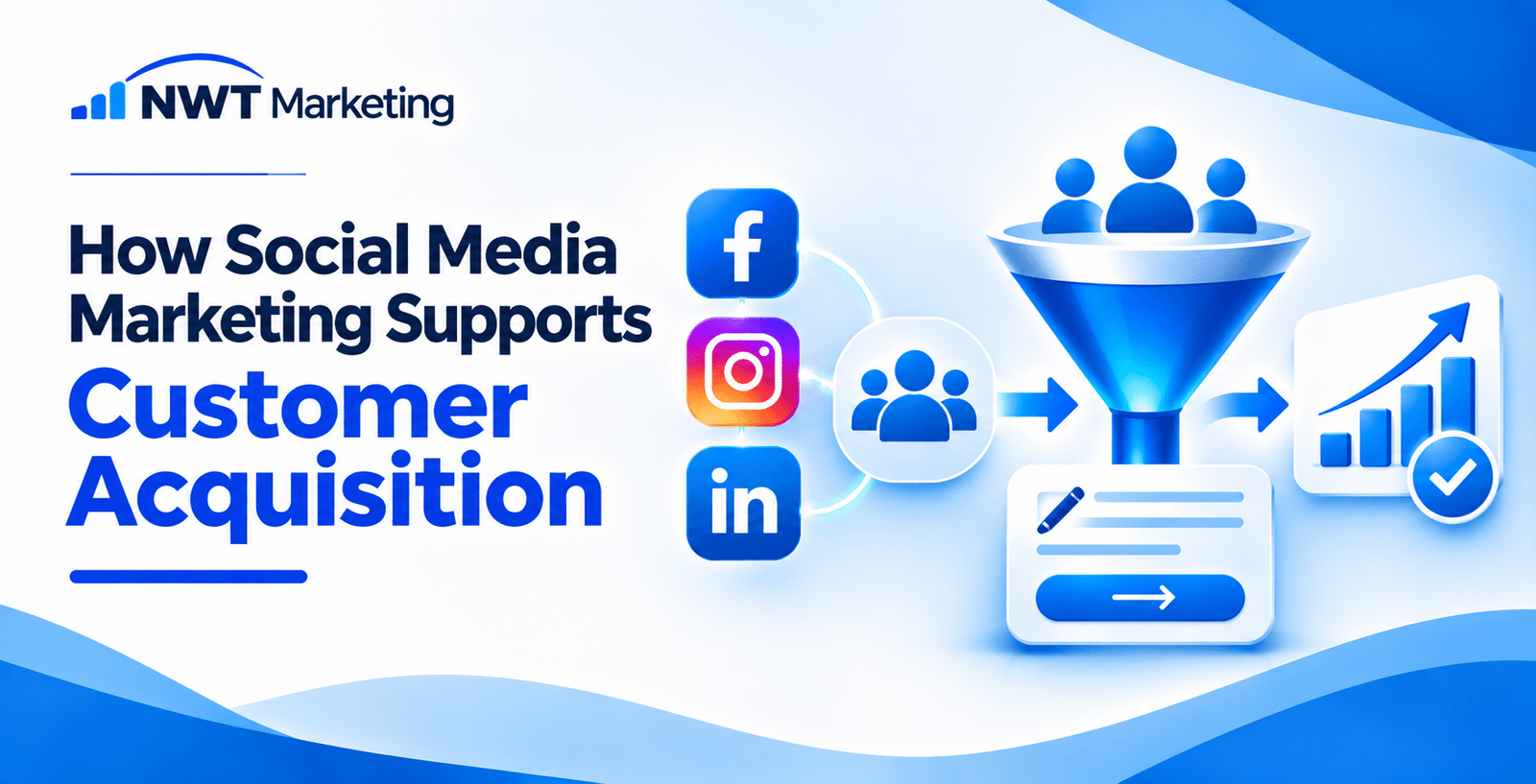
Social Media Marketing can support this process by helping lending businesses connect with relevant audiences across platforms such as Facebook, Instagram, and LinkedIn. When supported by a clear strategy, social media can increase brand awareness, generate enquiries, strengthen customer relationships, and contribute to a more consistent customer acquisition process.
However, success should not be measured by followers, likes, or impressions alone. The real value of Social Media Marketing comes from its ability to attract relevant audiences and move them towards meaningful business actions.
This guide explains how lending companies can use social media strategically, select suitable platforms, generate qualified leads, and measure the impact of their campaigns on customer acquisition.
What Is Social Media Marketing?
Social Media Marketing is the use of social platforms to promote a business, communicate with target audiences, share relevant content, and support marketing objectives.
For lending companies, this can involve publishing educational content, sharing company updates, promoting relevant services, answering common questions, and running paid campaigns designed to reach specific audience segments.
A structured Social Media Marketing approach combines several activities:
- Organic social media: Publishing regular content without paying for individual placements.
- Paid social advertising: Using advertising campaigns to reach selected audiences and promote specific messages.
- Audience targeting: Defining and reaching groups based on relevant characteristics and platform targeting options.
- Customer engagement: Responding to comments, messages, and enquiries to build relationships.
- Lead generation: Encouraging interested prospects to complete an enquiry form or take another measurable action.
- Performance measurement: Reviewing campaign data to understand which activities contribute to business objectives.
For consumer lending businesses, social media should support the wider marketing strategy. It should not operate independently from the website, search visibility, lead management, and customer communication processes.
Why Social Media Marketing Matters for Customer Acquisition
Customer acquisition involves attracting prospective customers and converting suitable prospects into customers. Social media can support different stages of this process by creating opportunities for businesses to reach, inform, and engage potential audiences.
A well-planned Social Media Marketing strategy can contribute to customer acquisition in several ways.
Social media should be part of a wider digital marketing approach rather than an isolated activity. For a broader overview, explore our guide to marketing strategies for lending businesses and how different marketing channels can support business growth.
1. Increasing Brand Awareness
Potential customers may encounter a lending company through search engines, advertisements, referrals, or social platforms. A consistent social media presence gives businesses another opportunity to introduce their brand and communicate what they offer.
Publishing useful content, sharing company updates, and maintaining consistent brand messaging can help audiences become more familiar with a business.
For lending companies, brand awareness content might include:
- Introductions to the company’s services and areas of expertise.
- Explanations of the business’s application process.
- Educational posts about general lending terminology.
- Company news and relevant industry updates.
- Answers to frequently asked questions.
- Information about customer support and communication channels.
Social Media Marketing can help keep a company visible to relevant audiences over time. However, visibility alone does not guarantee enquiries or conversions. Businesses should connect awareness campaigns to clear messaging and useful next steps.
2. Reaching Relevant Audiences
Reaching a large audience is not necessarily the same as reaching the right audience. Lending companies need to consider who they want to engage and which platforms are most suitable for their business objectives.
Audience targeting helps marketers define relevant groups and deliver content that reflects their interests, needs, and stage in the customer journey.
A practical customer acquisition strategy begins by identifying:
- The company’s target customer segments.
- The geographic markets it serves.
- The types of products or services it wants to promote.
- The questions and concerns potential customers may have.
- The channels those audiences are likely to use.
With a clear understanding of these factors, businesses can create more relevant campaigns rather than relying on broad messaging that attracts unqualified attention.
3. Building Trust Through Educational Content
Financial services audiences often need clear information before deciding whether to engage with a company. Social media provides an opportunity to publish educational content that addresses common questions and communicates a business’s expertise.
Examples include:
- Explaining general lending terminology.
- Describing common stages in an application process.
- Sharing guidance on preparing information for an application.
- Answering frequently asked questions.
- Clarifying how customers can contact the business.
- Publishing updates about the company’s services and processes.
Educational content can help reduce uncertainty and make a company’s communication more accessible.
An effective Social Media Marketing plan should prioritise accurate, useful information over exaggerated promotional messages. Lending-related content should also be reviewed for accuracy and compliance with applicable advertising and consumer protection requirements.
Choosing the Right Social Media Platforms for Lending Businesses
Not every social media platform serves the same purpose. The right choice depends on the company’s audience, marketing objectives, available resources, and content capabilities.
Lending companies should evaluate platforms based on their ability to reach relevant audiences and support measurable business outcomes.
<text>Facebook can support brand awareness, community engagement, and paid campaigns targeting relevant audiences.</text>
For consumer lending companies, potential activities include:
- Publishing educational posts and company updates.
- Sharing short videos explaining business processes.
- Promoting relevant landing pages.
- Running campaigns designed to generate enquiries.
- Responding to customer questions through available communication channels.
Facebook advertising can support social media lead generation when campaigns use relevant messaging, suitable targeting, and a clear conversion process.
Financial services advertisers should review platform-specific advertising requirements and restrictions before launching campaigns. Targeting options and eligibility may vary depending on the product, market, and applicable policies.
Instagram is a visual platform that can help businesses communicate through short-form videos, graphics, stories, and other visual content.
Lending companies can use it to:
- Introduce their brand and services.
- Share short educational videos.
- Explain general application steps.
- Publish frequently asked questions.
- Present company updates and relevant information.
Instagram may be particularly useful for simplifying complex information into accessible visual content. The objective should be to help audiences understand the business rather than publish content solely to increase engagement.
LinkedIn is particularly relevant to professional audiences, business networking, and B2B communication.
For companies operating in the lending ecosystem, LinkedIn can support:
- Industry insights and commentary.
- Company announcements.
- Professional thought leadership.
- Business partnerships and networking.
- Recruitment and employer branding.
- Content aimed at commercial and institutional audiences.
A lending company targeting business decision-makers may find LinkedIn useful for building professional visibility and developing relevant relationships.
How to Select the Most Suitable Platforms
Businesses should avoid spreading resources across every available platform without a clear purpose.
Instead, evaluate each channel against the following criteria:
| Evaluation factor | What to consider |
| Audience relevance | Does the platform reach the intended audience? |
| Business objectives | Can it support awareness, enquiries, or other acquisition goals? |
| Content suitability | Can the business consistently produce content suited to the platform? |
| Advertising options | Are suitable campaign formats available and permitted? |
| Measurement | Can the company track meaningful actions and outcomes? |
| Resource requirements | Does the business have the time and expertise to manage the channel? |
The strongest platform mix is the one that supports the company’s wider Social Media Marketing objectives and can be managed consistently.
How Social Media Marketing Generates Qualified Leads
Generating engagement is useful, but lending businesses ultimately need to attract prospects who are relevant to their services and target markets.
Social Media Marketing can support lead generation by connecting useful content and targeted campaigns with clear opportunities for interested audiences to enquire.
1. Create Content Around Audience Questions
Start by identifying the questions potential customers commonly ask before contacting a lending business.
These questions can inform content such as:
- Frequently asked questions.
- Educational graphics.
- Short explanatory videos.
- Service information posts.
- Guides to general application processes.
- Updates about the company’s services.
Content should provide genuine value and direct interested audiences towards an appropriate next step.
2. Use Clear Calls to Action
Every campaign should have a defined objective. Depending on the campaign, a call to action might encourage users to:
- Visit a relevant service page.
- Read an educational guide.
- Contact the business.
- Submit an enquiry.
- Request further information.
A clear call to action helps audiences understand what to do next and makes campaign performance easier to measure.
3. Connect Campaigns to Relevant Landing Pages
Sending social media traffic to a generic homepage may create unnecessary friction. A dedicated landing page can provide information that directly matches the campaign message.
An effective landing page should include:
- A clear and relevant headline.
- A concise explanation of the service.
- Accurate supporting information.
- A visible and accessible enquiry option.
- A simple form where appropriate.
- Clear privacy information and contact details.
This is where landing page optimization can strengthen the connection between social media campaigns and business outcomes.
4. Make Enquiry Forms Easy to Complete
Forms are an important part of the lead generation process. If a form is confusing, lengthy, or difficult to use on mobile devices, interested prospects may abandon it.
Businesses should review:
- The number of fields requested.
- Whether each field is necessary.
- Form layout and mobile usability.
- Error messages and validation.
- Confirmation messages after submission.
- How enquiries are routed to the relevant team.
A strong lead conversion optimization process considers the complete journey from the initial social media interaction to the submitted enquiry.
5. Follow Up on Enquiries Consistently
Generating an enquiry is only one stage of customer acquisition. Businesses also need a reliable process for managing and responding to incoming leads.
Marketing and sales teams should establish clear procedures for:
- Recording new enquiries.
- Assigning leads to the appropriate team.
- Responding within an appropriate timeframe.
- Tracking communication and follow-up activity.
- Identifying relevant next steps.
- Reviewing lead quality and outcomes.
Connecting social campaigns with a structured lead management process helps businesses understand whether their social media lead generation activity is producing relevant opportunities.
Organic Social Media and Paid Social Advertising
A successful Social Media Marketing strategy often combines organic content with paid campaigns. These approaches serve different purposes and can complement each other.
Organic Social Media
Organic social media involves publishing content without paying for individual advertising placements.
It can help lending businesses maintain an active presence, communicate their expertise, and build ongoing relationships with audiences.
Useful organic content formats include:
- Educational posts.
- Short-form videos.
- Frequently asked questions.
- Company updates.
- Industry commentary.
- Service explanations.
- Customer support information.
Consistency is important, but publishing frequently without a clear content strategy may produce limited business value. Each post should have a purpose that supports brand communication, audience education, or customer engagement.
Paid Social Advertising
Paid campaigns allow businesses to promote content and reach selected audiences through platform advertising systems.
Social media advertising can support objectives such as:
- Increasing awareness of the company.
- Promoting relevant services.
- Driving traffic to specific landing pages.
- Encouraging enquiries.
- Reaching new audience segments.
A campaign should have a clearly defined objective, suitable creative assets, accurate messaging, and a measurable conversion action.
For lending businesses, paid campaigns require particular care. Advertising claims should be accurate, relevant disclosures should be included where required, and campaigns must comply with applicable platform policies and U.S. advertising regulations.
Combining Organic and Paid Activity
Organic and paid activity can work together within a broader Social Media Marketing strategy.
For example, a company might publish educational content organically to build a useful content library, then use paid campaigns to promote selected resources to relevant audiences.
The two approaches should be evaluated separately as well as together. Organic engagement and paid campaign results can provide different insights into audience interests and acquisition performance.
Using Social Media Marketing to Improve Customer Engagement
Customer engagement is an important part of developing relationships with potential customers. It gives businesses opportunities to answer questions, clarify information, and maintain communication with their audiences.
An effective customer engagement approach should be responsive, helpful, and consistent.
Lending companies can improve engagement by:
- Responding to comments and relevant questions.
- Providing clear answers to general enquiries.
- Sharing useful educational resources.
- Maintaining consistent brand messaging.
- Directing users to appropriate service information.
- Monitoring feedback and recurring customer concerns.
Engagement can also provide useful insights for future content planning. If audiences repeatedly ask similar questions, those questions may indicate gaps in existing website content or opportunities for new educational resources.
However, public comments and direct messages should not be used to collect sensitive personal or financial information. Businesses should direct customers to appropriate secure communication channels when individual circumstances need to be discussed.
Measuring the Impact of Social Media on Customer Acquisition
A campaign should not be considered successful simply because it generates likes, shares, or new followers. Lending companies need to understand whether social activity contributes to meaningful business outcomes.
Social Media Marketing performance should be evaluated using metrics that reflect the campaign’s actual objective.
Key Social Media Metrics
| Metric | What it measures |
| Reach | The number of unique users who saw content or advertising. |
| Impressions | The total number of times content or ads were displayed. |
| Engagement rate | The level of interaction relative to the selected measurement basis. |
| Link clicks | The number of clicks on campaign links. |
| Click-through rate (CTR) | The proportion of impressions that resulted in clicks. |
| Cost per lead (CPL) | Advertising spend divided by the number of leads generated. |
| Landing page conversion rate | The proportion of visitors who completed the defined conversion action. |
| Qualified leads | Leads that meet the company’s defined qualification criteria. |
| Customer acquisition cost (CAC) | The cost associated with acquiring a customer, based on the company’s chosen calculation method. |
These metrics should be interpreted together. For example, a campaign may generate a high volume of clicks but few relevant enquiries. Another campaign may generate fewer leads but a higher proportion of qualified opportunities.
Track Conversions Across the Customer Journey
Businesses should connect social media reporting with website analytics and lead management data.
A practical measurement setup may include:
- Adding UTM parameters to campaign links.
- Configuring GA4 to measure relevant website activity.
- Tracking enquiry form submissions and other important conversion events.
- Using consistent campaign naming conventions.
- Connecting website enquiries with the company’s lead management system.
- Reviewing lead quality and acquisition outcomes with the relevant teams.
This helps businesses understand which campaigns generate traffic, which encourage enquiries, and which contribute to customer acquisition.
Review Campaign Performance Regularly
Campaign reporting should lead to decisions, not simply produce dashboards.
Marketing teams can review performance to identify:
- Which platforms attract relevant audiences.
- Which content formats generate meaningful engagement.
- Which campaigns produce qualified enquiries.
- Where visitors abandon the conversion journey.
- Which landing pages need improvement.
- How acquisition costs change over time.
A structured Social Media Marketing reporting process helps businesses identify opportunities to improve targeting, content, landing pages, and follow-up activity.
Common Social Media Marketing Mistakes Lending Companies Should Avoid
Even well-funded campaigns can underperform when the strategy lacks clear objectives or a reliable measurement process.
1. Focusing Only on Followers and Likes
Audience growth can be useful, but it does not automatically translate into business opportunities. Businesses should evaluate engagement alongside website visits, enquiries, lead quality, and conversions.
2. Using the Same Content on Every Platform
Different platforms have different audiences, formats, and communication styles. Content should be adapted to the channel rather than copied everywhere without considering context.
3. Targeting Audiences Too Broadly
Broad targeting can attract attention from people who are not relevant to the company’s services. A clearly defined audience and appropriate campaign settings can help improve relevance.
4. Sending All Traffic to the Homepage
Campaign visitors should land on pages that match the message they clicked. A relevant landing page can make it easier for users to understand the service and complete the intended action.
5. Ignoring Lead Follow-Up
A campaign may generate enquiries, but slow or inconsistent responses can weaken the acquisition process. Marketing activity should be connected to a clear lead management and follow-up workflow.
6. Failing to Measure Qualified Leads
The number of submitted forms does not always reflect lead quality. Businesses should establish qualification criteria and review the outcomes of leads generated through each campaign.
7. Publishing Inaccurate or Misleading Financial Claims
Lending-related marketing requires careful review. Businesses should avoid unsupported claims, misleading promises, unclear terms, and content that could create inaccurate expectations.
A reliable Social Media Marketing programme should include an appropriate content review process and consider relevant U.S. regulatory requirements and advertising platform policies.
Lending-related marketing requires careful review. Businesses should avoid unsupported claims, misleading promises, unclear terms, and content that could create inaccurate expectations. Lending companies should ensure that their advertising claims are accurate, supported by evidence, and consistent with applicable truth-in-advertising standards.
How to Build a Social Media Marketing Strategy for a Lending Business
A practical strategy gives marketing teams a framework for planning, executing, and evaluating their activities.
The following steps can help lending businesses develop a more structured approach.
Step 1: Define Customer Acquisition Goals
Start with specific business objectives. These might include increasing relevant website traffic, generating enquiries, improving lead quality, or supporting customer acquisition in a particular market.
Each objective should have a corresponding performance metric.
Step 2: Identify Target Audiences
Define the audience segments the business wants to reach. Consider relevant customer characteristics, geographic coverage, service requirements, and common questions.
Audience definitions should be based on legitimate business needs and must respect applicable advertising restrictions.
Step 3: Select Suitable Platforms
Choose platforms according to audience relevance, campaign objectives, available resources, and measurement capabilities.
A company may prioritise Facebook and Instagram for consumer-facing content while using LinkedIn for professional and B2B communication.
Step 4: Develop a Content Plan
Create a consistent publishing schedule that balances educational, brand-building, service-related, and engagement-focused content.
A documented Social Media Marketing strategy helps maintain consistent messaging and gives teams a clearer understanding of what each piece of content is intended to achieve.
Step 5: Launch and Manage Campaigns
When using paid campaigns, define the objective, audience, creative assets, landing page, budget, and conversion action before launch.
Monitor campaign delivery and review results against the original objective.
Step 6: Improve the Conversion Journey
Review the experience after users click an advertisement or social post. Check page relevance, mobile usability, form completion, and the enquiry process.
Improving the conversion journey can help businesses get more value from existing campaign traffic.
Step 7: Measure and Refine
Use analytics and lead management data to evaluate performance. Identify which activities attract relevant audiences and which contribute to qualified opportunities.
A continuous improvement process allows Social Media Marketing activity to adapt as audience behaviour, campaign performance, and business priorities change.
FAQs
How does social media marketing support customer acquisition?
Social Media Marketing supports customer acquisition by helping businesses increase brand awareness, reach relevant audiences, share useful information, generate enquiries, and direct potential customers towards appropriate conversion points. Its impact depends on campaign relevance, landing page quality, and effective lead follow-up.
Which social media platforms are best for lending companies?
The most suitable platforms depend on the company’s target audience and objectives. Facebook and Instagram can support consumer-facing communication and advertising, while LinkedIn can be useful for professional networking and B2B marketing. Businesses should assess each platform based on audience relevance and measurable results.
Can social media generate qualified leads for lending businesses?
Yes. Social campaigns can generate enquiries when they use relevant messaging, suitable audience targeting, clear calls to action, and landing pages designed around the campaign objective. Businesses should then assess enquiries against their own lead qualification criteria.
What is the difference between organic social media and paid social advertising?
Organic social media involves publishing content without paying for individual placements. Paid social advertising uses a budget to promote content or campaigns to selected audiences. Both can contribute to brand awareness and customer acquisition, but their objectives and performance should be measured appropriately.
How should lending companies measure social media marketing performance?
Businesses should measure results using metrics such as reach, impressions, engagement, link clicks, conversion rate, cost per lead, qualified leads, and customer acquisition cost. The most important metrics depend on the campaign objective and should be connected to website analytics and lead management data.
How often should a lending company post on social media?
There is no universal posting frequency that works for every business. Companies should establish a realistic schedule based on their resources, audience activity, platform requirements, and content quality. Consistent, useful publishing is generally more valuable than posting frequently without a clear purpose.
Is social media marketing enough to acquire customers?
No. Social media is one part of a wider digital marketing and customer acquisition strategy. Lending companies should also consider their website, SEO, paid search, landing pages, analytics, and lead follow-up processes. Integrating these channels can create a more consistent customer journey.
Conclusion
Social Media Marketing can play an important role in helping lending companies build brand awareness, connect with relevant audiences, generate enquiries, and support customer acquisition.
However, its effectiveness depends on more than publishing regular posts or investing in advertising. Businesses need a clear audience strategy, useful content, suitable platform selection, relevant landing pages, accurate messaging, and a reliable approach to measuring results.
By connecting social media activity with lead generation, website optimization, analytics, and follow-up processes, lending companies can build a more measurable and consistent approach to digital customer acquisition.
NWT Marketing helps businesses in the lending ecosystem strengthen their digital presence through strategic digital marketing, SEO, paid advertising, lead generation, conversion rate optimization, and marketing analytics. A coordinated approach can help marketing teams make better use of their channels and focus on measurable business outcomes.