
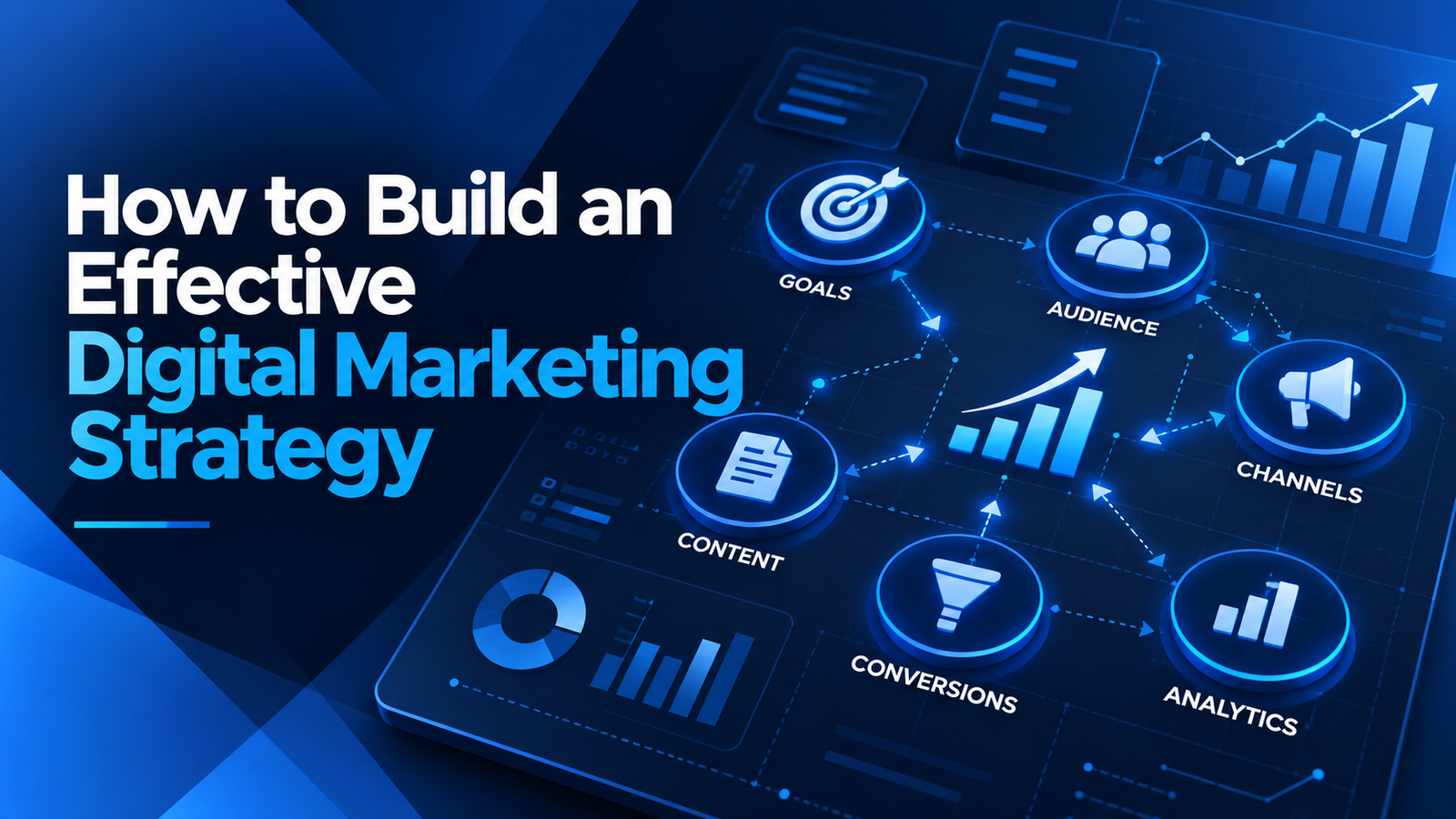
A strong digital marketing strategy helps businesses attract the right audience, generate qualified leads, strengthen online visibility, and improve customer acquisition. For companies in the lending and financial services ecosystem, having a clear approach is especially important because prospects often research providers, compare options, and evaluate credibility across multiple digital channels.
Instead of treating SEO, PPC, content, social media, and lead generation as separate activities, businesses can connect them through a unified marketing strategy built around measurable business goals.
This guide explains how to build an effective strategy, create a practical execution plan, and select digital channels that support sustainable business growth.
What Is a Digital Marketing Strategy?
A digital marketing strategy is a structured approach for using digital channels to achieve specific business objectives. It connects a company’s goals with its target audience, messaging, content, channels, budget, and performance measurement.
For companies operating in the lending ecosystem, this may include improving search visibility, generating qualified leads, strengthening customer acquisition, and creating better website conversion paths.
A strategy may include:
- Search engine optimization (SEO)
- Pay-per-click advertising (PPC)
- Content marketing
- Social media marketing
- Lead generation
- Customer acquisition
- Conversion rate optimization
- Marketing automation
- Email marketing
- Marketing analytics
- AI search, AEO, and GEO
The goal is not to use every available channel. Businesses should prioritize the channels that match their audience, objectives, budget, and customer journey.
A well-developed digital marketing strategy also establishes how success will be measured. Instead of focusing only on traffic or impressions, marketing teams can track qualified leads, conversion rates, cost per lead, customer acquisition costs, and other meaningful business outcomes.
Why Is a Digital Marketing Strategy Important?
A digital marketing strategy turns individual marketing activities into a coordinated growth system.
Without a clear strategy, a business may invest in PPC without optimizing its landing pages, publish content without understanding search intent, or generate traffic without providing visitors with a clear conversion path.
For lending and financial services companies, these gaps can make it harder to turn online visibility into qualified opportunities.
Align Marketing With Business Goals
Start by defining what marketing needs to accomplish. Goals may include increasing qualified leads, improving customer acquisition, increasing website conversions, expanding organic visibility, or reducing acquisition costs.
Once these objectives are clear, marketers can select channels and campaigns based on their expected business impact.
Reach the Right Audience
Audience research helps businesses understand what potential customers search for, which channels they use, what questions they have, and what influences their decisions.
For companies in the lending ecosystem, understanding customer segments and their digital behavior can help shape content, advertising, landing pages, and messaging.
Improve Marketing Efficiency
A strategy helps businesses prioritize resources instead of trying to manage every digital channel.
For example, SEO can build long-term organic visibility, while PPC can provide faster exposure for high-intent searches. Content can support both by answering relevant questions and strengthening topical authority.
Measure Performance
A strategic approach establishes KPIs before campaigns begin. Marketing teams can monitor organic traffic, qualified leads, conversion rates, cost per lead, paid search performance, and customer acquisition costs.
These insights create a feedback loop that allows teams to improve campaigns based on actual performance.
How to Build an Effective Digital Marketing Strategy
Building an effective digital marketing strategy starts with understanding the business, audience, competition, and desired outcomes.
1. Define Clear Goals
Begin with the business outcome rather than the marketing channel.
Instead of setting a broad goal such as “increase website traffic,” establish a measurable objective, such as increasing qualified organic leads by a specific percentage within six months.
Clear goals make it easier to select channels and evaluate results.
2. Identify Your Target Audience
Define who the business wants to reach and understand their needs, search behavior, challenges, and decision-making process.
For businesses in the lending ecosystem, research may include customer segments, search intent, common questions, conversion barriers, and preferred communication channels.
This information should influence your content, advertising, website experience, and messaging.
3. Analyze Competitors
Competitor research can reveal opportunities in both organic and paid search.
Review competitors’ websites, organic rankings, content, paid advertising, calls to action, landing pages, and positioning.
The objective is not to copy competitors. Instead, identify gaps and opportunities to create a stronger value proposition.
4. Choose the Right Channels
The right channel mix depends on the audience and business objectives.
SEO can build long-term organic visibility and capture relevant search demand.
PPC can help businesses reach users searching for high-intent terms and generate faster traffic.
Content marketing can answer audience questions, support SEO, and contribute to lead generation.
Social media can strengthen brand awareness and engagement.
Email and marketing automation can help nurture prospects throughout the customer journey.
Conversion rate optimization can improve the percentage of visitors who take valuable actions.
The strongest approach is usually an integrated channel strategy rather than relying on one traffic source.
5. Build Content Around Search Intent
Content should answer real audience questions and support different stages of the customer journey.
A financial services marketing team might create content addressing industry questions, customer acquisition challenges, product information, common concerns, and decision-stage topics.
Informational searches may require educational guides, while high-intent searches may be better served by service pages and conversion-focused landing pages.
6. Create Conversion-Focused Experiences
Generating traffic is only part of digital marketing. The website should make it easy for visitors to take the next step.
Important conversion elements include:
- Clear calls to action
- Relevant landing pages
- Simple forms
- Trust signals
- Strong messaging
- Mobile-friendly design
- Fast page performance
A well-optimized website can increase the value of traffic generated through both organic and paid channels.
7. Measure and Optimize
A digital marketing strategy should evolve based on performance data.
Review which channels generate qualified leads, which pages convert visitors, which keywords attract valuable traffic, and where prospects leave the conversion journey.
Testing landing pages, calls to action, content formats, and advertising messages can help marketing teams improve performance over time.
How to Create a Digital Marketing Plan That Works
A digital marketing plan turns the overall strategy into specific campaigns, activities, budgets, timelines, and responsibilities.
The strategy defines the direction; the plan defines how that direction will be executed.
A practical plan should include:
Marketing Objectives
Set measurable targets for lead generation, organic visibility, conversions, customer acquisition, or other business priorities.
Audience and Customer Journey
Identify your target segments and understand what information they need at different stages before becoming customers.
Channel Priorities
Determine which channels deserve the most resources based on audience behavior and expected business impact.
Content Calendar
Create a schedule that connects content topics with business goals, search opportunities, and customer needs.
Budget
Set budgets for paid media, content, technology, creative work, and other marketing activities. Review allocation regularly based on performance.
KPIs and Reporting
Track meaningful metrics such as qualified leads, conversion rate, cost per lead, organic visibility, paid conversions, and customer acquisition cost.
Optimization
Regularly review results and identify what needs to change. If a campaign generates traffic but few qualified leads, improving targeting, messaging, or the landing page may be more effective than simply increasing the budget.
How to Build a Digital Marketing Strategy for Small Business
Small businesses often have smaller teams and more limited budgets than larger organizations. As a result, prioritization is critical.
A digital marketing strategy for small business should focus on the audiences and channels most likely to create measurable business value.
Focus on a Specific Audience
Rather than trying to reach everyone, define the customer segments that are most valuable to the business. A focused audience makes it easier to create relevant messaging and targeted campaigns.
Build an Organic Foundation
SEO can help small businesses build visibility without relying entirely on paid traffic.
Key areas include:
- Optimized service pages
- Useful educational content
- Internal linking
- Technical SEO
- Relevant keyword targeting
- Clear website structure
Use Paid Advertising Strategically
Paid advertising can provide faster visibility when campaigns are carefully targeted.
When evaluating the best online advertising for small business, consider audience intent, competition, campaign costs, conversion rates, and customer value.
Search advertising can be particularly useful when potential customers are actively looking for relevant services.
Create Useful Content
Small businesses do not need to publish large volumes of content. Instead, focus on topics that answer important questions and support the customer journey.
Educational articles can attract early-stage visitors, while service pages and decision-stage content can help move prospects toward conversion.
Optimize Conversion Opportunities
Traffic becomes more valuable when the website converts effectively.
Review calls to action, forms, landing pages, navigation, page speed, trust elements, and the mobile experience.
Reallocate Resources Based on Results
Track which channels generate qualified opportunities. If one channel consistently produces stronger results, consider shifting resources toward it.
The goal is not simply more marketing activity. It is a digital marketing strategy that uses available resources efficiently.
Common Digital Marketing Strategy Mistakes to Avoid
Focusing Only on Traffic
Traffic is useful, but it should not be the only measure of success. Relevant traffic that generates qualified opportunities is more valuable than large volumes of visitors who never convert.
Using Too Many Channels
Trying to manage every platform can dilute resources. Prioritize the channels most relevant to your audience and objectives.
Creating Content Without Search Intent
Content created without understanding audience needs and search intent may receive little visibility or generate limited business value.
Ignoring Conversion Optimization
Even strong acquisition campaigns can underperform when landing pages, forms, and calls to action are not optimized.
Making Decisions Without Data
Marketing decisions should be based on performance data rather than assumptions. Regular reporting helps identify where investment should increase, decrease, or change direction.
Treating the Strategy as a One-Time Project
Customer behavior, competitors, search trends, and digital channels change. A successful strategy should therefore be reviewed and optimized continuously.
About NWT Marketing
NWT Marketing is a U.S.-focused digital marketing agency helping businesses in the lending ecosystem strengthen their online presence, reach the right audiences, generate qualified leads, and improve customer acquisition. Our services include SEO, PPC, content marketing, lead generation, conversion optimization, marketing analytics, and AI search strategies.
Want to learn more about who we are and how NWT Marketing supports growing businesses?
Learn More About NWT Marketing
Build a Digital Marketing Strategy That Drives Results
A successful digital marketing strategy should do more than increase website traffic. It should help your business reach the right audience, generate qualified opportunities, improve customer acquisition, and create measurable growth.
NWT Marketing provides digital marketing solutions for businesses in the U.S. lending ecosystem, helping them strengthen online visibility, generate qualified leads, and build more effective customer acquisition programs.
Ready to turn your marketing goals into a measurable growth strategy?
FAQs
What is a digital marketing strategy?
A digital marketing strategy is a structured approach that defines how a business will use digital channels and marketing activities to achieve specific business goals. For companies operating in the financial sector, financial services digital marketing can help connect SEO, content, paid advertising, lead generation, and customer acquisition into a unified approach.
Why is a digital marketing strategy important for businesses?
A digital marketing strategy helps businesses align marketing activities with measurable objectives. It can improve audience targeting, lead generation, customer acquisition, online visibility, and marketing efficiency.
How do you create an effective digital marketing strategy?
Define business goals, identify the target audience, analyze competitors, select appropriate channels, create content around search intent, optimize conversion paths, establish KPIs, and continuously improve campaigns based on performance data.
What is the difference between a digital marketing strategy and a digital marketing plan?
A strategy defines the overall direction, goals, audience, positioning, and channel approach. A plan translates that strategy into specific campaigns, activities, budgets, timelines, responsibilities, and KPIs.
What is the best digital marketing strategy for small businesses?
There is no single strategy that works for every small business. The right approach depends on the audience, industry, budget, competition, and objectives. SEO, content marketing, PPC, social media, and conversion optimization can all be effective when properly prioritized.
Which digital marketing channels are most effective for small businesses?
The most effective channels depend on where the target audience searches for information and makes decisions. SEO, PPC, content marketing, social media, email marketing, and conversion optimization can all contribute to growth when aligned with clear objectives.